Tanzania’s largest water utilities had a billing problem the size of their service area: between 30% and 45% of all water produced was non-revenue. Meters were ageing, readings were monthly at best, and leak response was always reactive. We were asked to design and deploy a national-grade smart metering programme that could change that — at scale.
The challenge
Aging mechanical meters were under-registering by up to 22%. Field teams could not respond to leaks before they became main breaks. Customer disputes consumed billing-team capacity. And there was no shared visibility between production telemetry and consumption data — the two halves of any utility’s operating reality.
The brief was unusually broad: design the meter hardware specification, build the data platform, integrate with three different billing back-ends, and stand up a field-operations capability that could install at a rate of 600 endpoints a week.
What we delivered
A turnkey programme covering hardware, software, integration and operations:
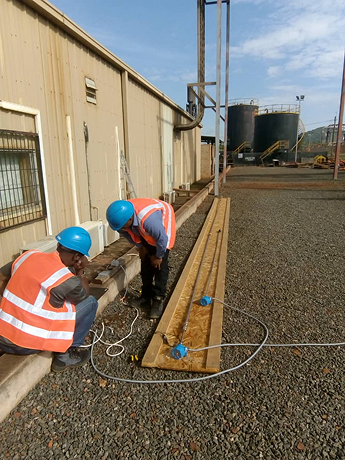
- 25,000 NB-IoT meters commissioned across Dar es Salaam, Arusha and Mwanza, with georeferenced installation against the customer cadaster.
- A Meter Data Management platform ingesting readings every 15 minutes per household, AES-256 encrypted on-device.
- Bi-directional integrations with three legacy billing systems and a unified self-service portal for residents.
- A leak-response operations tier with night-flow anomaly detection and automated work-order dispatch.
- Capacity transfer — eight engineers on the utility side trained and certified on the platform.
Lessons & what’s next
The hardest part of digital transformation in utilities is not the hardware or the software. It is the integration between them and the organisation that has to act on the data. Phase II extends coverage to two new regions and adds a bulk-meter tier for industrial customers — where the economics of accurate metering are, if anything, more consequential.